The Cosmic Plot Twist: Why Spica is Not Just a Binary Star, But a Triple System
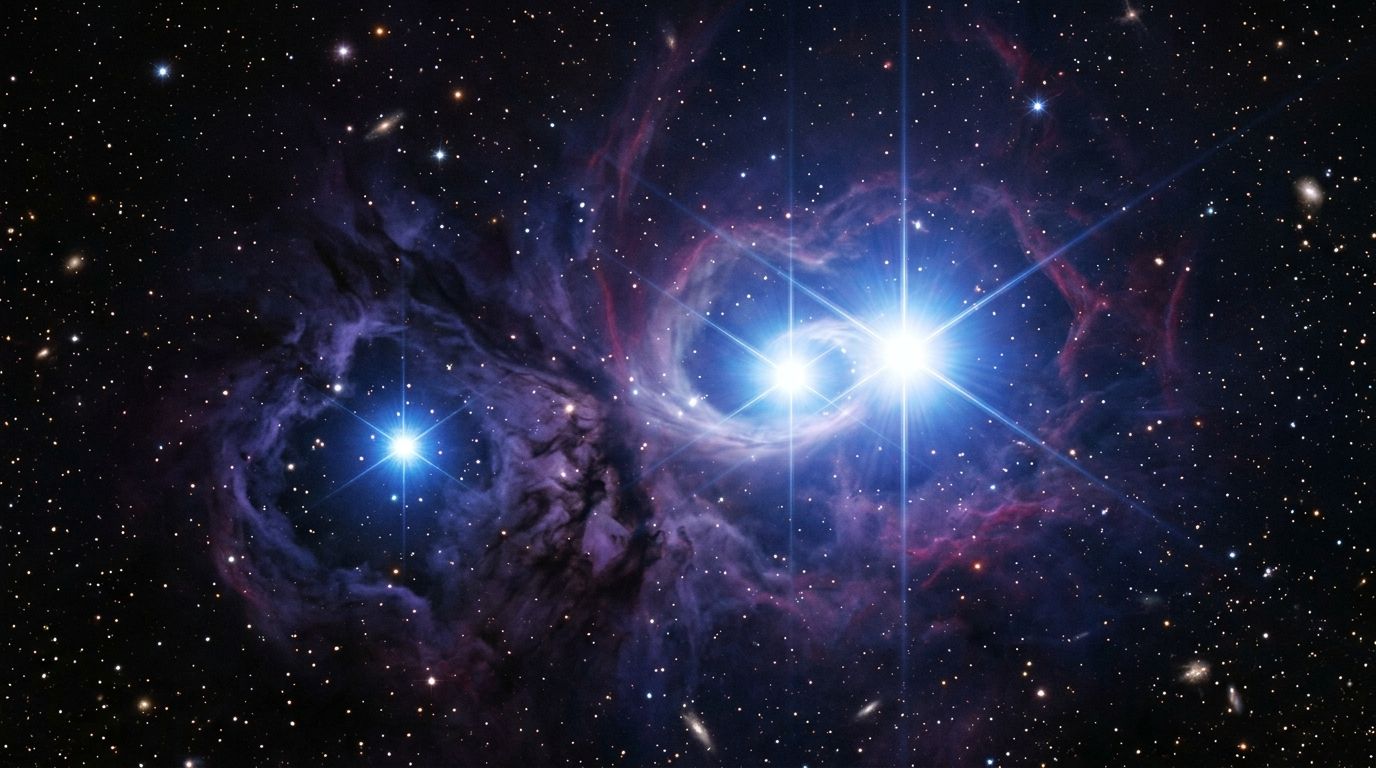
“For centuries, astronomers thought Spica was a simple pair of stars. But the universe had a plot twist. Discover the hidden third star in this dazzling triple system.”
Look up at the night sky, and you will see thousands of twinkling dots. To the naked eye, they appear as solitary beacons of light. But in reality, the universe is incredibly social. Many of the "stars" we see are actually complex systems of multiple stars locked in a gravitational dance.
Take, for example, the brilliant star Spica. For over a century, astronomers believed they had this star completely figured out. They knew it as a binary system—two massive stars orbiting each other. But earlier this year, a stunning new report revealed a cosmic plot twist: Spica is actually a triple star system.
(Want to explore the universe in 3D? Check out our interactive Solar System and live Star data on Galaxander.com!)
Here is the fascinating story of how we discovered this, what it means for astronomy, and how you can spot this incredible system from your own backyard.
The Brightest Jewel of Virgo
Before we dive into the science, let’s understand what we are looking at. Spica is the brightest star in the constellation of Virgo (the Maiden) and is one of the brightest stars in the entire night sky. Located approximately 250 light-years away from Earth, Spica emits a stunning blue-white glow.
Because it is so bright, it has served as a crucial navigational marker for humanity for thousands of years. It has even played a role in famous astronomical discoveries, such as helping the ancient Greek astronomer Hipparchus discover the precession of the equinoxes.
The 1890 Discovery: A Cosmic Waltz
In 1890, astronomers using early spectroscopes made a groundbreaking discovery. By analyzing the light coming from Spica, they realized it wasn't a single star. It was a binary star system.
What made this pair so incredible was its speed. These two massive, intensely hot blue stars are whipping around each other at a breathtaking pace. They complete a full orbit around their common center of mass every 4 days. To put that into perspective, it takes Earth 365 days to orbit the Sun. This tight, rapid waltz creates massive gravitational forces and intense radiation.
For the next 130 years, this was the accepted truth. Spica was a pair of frantic blue stars. But science is never static.
The Plot Twist: The Hidden Third Companion
Earlier this year, new research and observational data dropped a bombshell on the astronomical community. It turns out that the two massive stars are not alone. There is a third star in the system.
How could we miss it for so long? Because the two main stars are incredibly bright and close together, the third star is practically invisible, hidden in their blinding glare. However, by studying the subtle gravitational tugging of the main pair—how their orbits slightly wobble—astronomers were able to deduce the presence of a third, unseen companion.
This confirms that Spica is actually a triple star system. The two massive stars continue their 4-day waltz, while the third star likely orbits them at a much greater distance, completing its own much slower orbit.
The Physics: Celestial Mechanics and Conjunctions
The discovery of Spica’s triple nature perfectly illustrates a fundamental rule of the cosmos: Celestial Mechanics.
The universe is governed by the precise laws of gravity. Just like the planets in our solar system, stars are constantly moving and interacting. This is what causes "conjunctions"—events where celestial objects appear close to each other in our sky.
Recently, skywatchers in Poland and around the world were treated to a beautiful example of this. They captured images of a delicate crescent Moon hovering above the Tatra Mountains, with brilliant Venus shining closely beside it. But what was that bright star just to the left of Venus? It was Spica.
This beautiful alignment wasn't a random chance event. It was the result of the precise, predictable movement of Venus (the "wandering star") across our night sky, passing in front of the distant Virgo constellation.
Why Does This Matter?
You might wonder why we should care if a star 250 light-years away has two or three stars.
The study of systems like Spica helps astronomers understand how the universe was built. Massive blue stars like the ones in the Spica system are the "factories" of the cosmos. They forge heavy elements and, when they eventually explode as supernovae, they scatter those elements across space—elements that eventually form planets, and even life.
Furthermore, learning that our 130-year-old assumptions were incomplete is a beautiful reminder of the scientific process. As our telescopes get better and our methods become more precise, we will continue to discover that the universe is far more complex and beautiful than we ever imagined.
How to Spot Spica Yourself
Want to see this triple-star system with your own eyes?
Look for Venus: If you see a brilliant, steady "star" in the early evening or morning sky, that is likely Venus.
Find the Blue Star: Look near Venus for a bright, noticeably bluish-white star.
Use the Big Dipper: If you can find the handle of the Big Dipper, follow the arc of the handle down to a bright star (Arcturus), and then continue that curve down to the next bright star. This old trick is called "Arc to Arcturus, then spike on to Spica."
When you finally spot it, take a moment to appreciate what you are seeing. You are looking at a cosmic dance of three massive stars, locked in a gravitational embrace 250 light-years away.
The universe is constantly surprising us. Keep looking up!
🚀 Explore More on Galaxander
Want to learn more about the secrets of the universe? Visit our interactive 3D platform to explore the Solar System, track live Moon phases, and discover the true scale of the cosmos.
👉 Start Exploring: https://galaxander.com
Galaxander Team
Dedicated to translating the mysteries of celestial mechanics, astrophysics, and deep space telemetry into compelling insights for stargazers across the globe.
More Cosmic Discoveries
Beyond the Textbook: How We Built a Cinematic Gravity Lab in Your Browser 🌍🚀
Space isn't just about looking at planets; it's about understanding how they move. But making orbital physics look like a Hollywood movie is harder than it sounds.
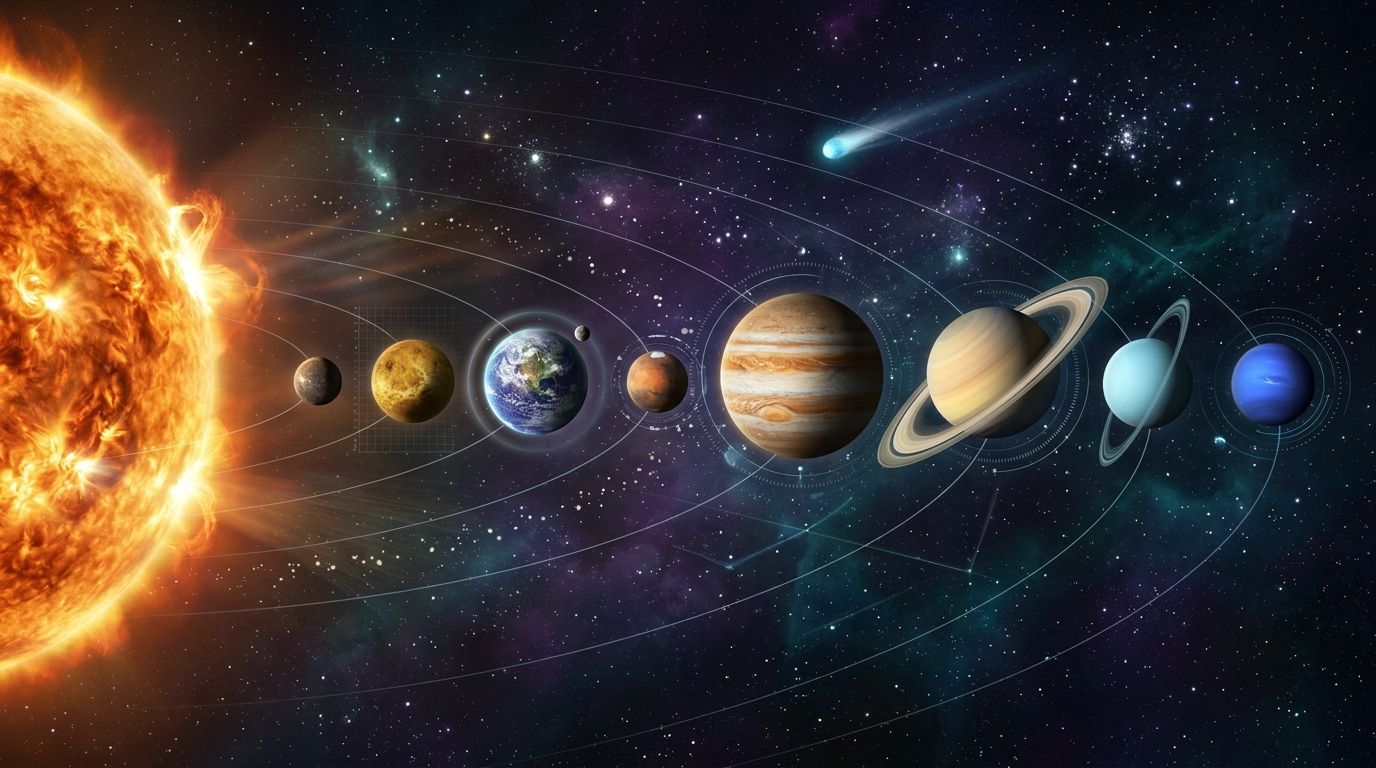
Explore the Solar System in 3D: A Journey Through Our Cosmic Neighborhood
Have you ever wanted to fly through space? Discover how our interactive 3D Solar System brings the planets, moons, and orbits directly to your screen.